
Other News from Participating Centers

Pricing Lives: Guideposts for a Safer Society

Book by W. Kip Viscusi: “Like it or not, sometimes we need to put a monetary value on people’s lives. In the past, government agencies used the financial “cost of death” to monetize the mortality risks of regulatory policies, but this method vastly undervalued life. Pricing Lives tells the story of how the government came to adopt an altogether different approach–the value of a statistical life, or VSL—and persuasively shows how its more widespread use could create a safer and more equitable society for everyone.
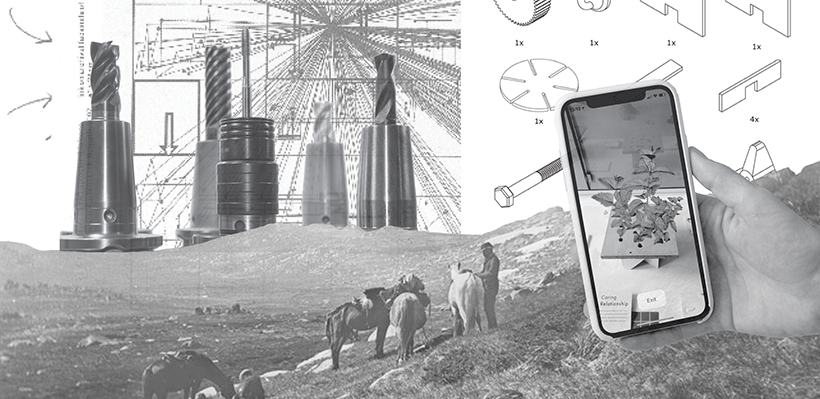
IoT Tales of Horror (Inspired by Real-Life Events)

Happy Halloween! In some parts of the world, people are celebrating this holiday of horror by dressing up as monsters or other frights and watching scary movies. But sometimes these tales can be just a little boring. Pod people? Headless horsemen? Replicant children? Whatever.

The Shifting Landscape of E-Commerce

It’s no surprise that buying behaviors have seen significant change over the past several years. Global online e-commerce sales are expected to double between 2016 and 2020. According to the U.S.

NTU and NUS officially launch Singapore Energy Centre to address future energy challenges

...

NTU and NUS officially launch Singapore Energy Centre to address future energy challenges

...

“Learning Public Innovation” Conferences: Measurement and Evaluation

This blog post originally appeared on Politics for Tomorrow.

Open Data Exposed

Book by Bastiaan van Loenen, Glenn Vancauwenberghe, Joep Crompvoets and Lorenzo Dalla Corte: “This book is about open data, i.e. data that does not have any barriers in the (re)use. Open data aims to optimize access, sharing and using data from a technical, legal, financial, and intellectual perspective.

The Collaborative Era in Science: Governing the Network

Book by Caroline S. Wagner: “In recent years a global network of science has emerged as a result of thousands of individual scientists seeking to collaborate with colleagues around the world, creating a network which rises above national systems. The globalization of science is part of the underlying shift in knowledge creation generally: the collaborative era in science.

Ausgezeichnet: Eva-Ellen Sieweke und Jan Philip Schain mit Promotionspreis der Schweitzer Fachinformationen sowie Matthias Hunold mit Rolf-Schwarz-Schütte Förderpreis

Promotionspreis 2017 der Schweitzer Fachinformationen:
Dr. Eva-Ellen Sieweke „Die Gratifikationskrise aus personalwirtschaftlicher Perspektive– Empirische Analysen zu Einflussfaktoren und Auswirkungen“

Digital Development Is the Way Forward: The Suusamyr Community Network Launches at CNX

Asylbek Sanarbekov, a social worker in the village of Suusamyr, Kyrgyzstan, can often be seen standing outside of his office building, phone in hand.

Positive deviance, big data, and development: A systematic literature review

Paper by Basma Albanna and Richard Heeks: “Positive deviance is a growing approach in international development that identifies those within a population who are outperforming their peers in some way, eg, children in low‐income families who are well nourished when those around them are not. Analysing and then disseminating the behaviours and other factors underpinning positive deviance are demonstrably effective in delivering development results.

Riesen-Erfolg für Wahl-O-Mat in Bayern und Hessen

Begleitet wurde die Erstellung des seitens der Bevölkerung stark nachgefragten Tools erneut von Wissenschaftlerinnen und Wissenschaftlern der Wahl-O-Mat-Forschung an der Heinrich-Heine-Universität unter Leitung von Prof. Dr. Stefan Marschall. „Wir erleben, dass in Zeiten schwächer werdender Parteibindungen insbesondere auch die Themenorientierung von Wählerinnen und Wählern bei ihrem Wahlverhalten verstärkt wird. Der Wahl-O-Mat kann hier als unterstützende Orientierungshilfe gesehen werden“, so Marschall.

Max-Planck-Schools: Graduierte können sich ab 1. November bewerben

Herausragende Forscherinnen und Forscher von Universitäten, Max-Planck-, Fraunhofer- und Leibniz-Instituten sowie Helmholtz-Zentren haben sich für die Max Planck Schools vernetzt. Es gibt zur Zeit drei Max Planck Schools: Kognitions- und Neurowissenschaft, (Ko-Sprecherin ist Prof. Dr. Katrin Amunts, HHU/FZ Jülich), Photonik und Lebenswissenschaften.

Creating and Capturing Value through Crowdsourcing

Book edited by Allan Afuah, Christopher L. Tucci, and Gianluigi Viscusi: “Examples of the value that can be created and captured through crowdsourcing go back to at least 1714 when the UK used crowdsourcing to solve the Longitude Problem, obtaining a solution that would enable the UK to become the dominant maritime force of its time. Today, Wikipedia uses crowds to provide entries for the world’s largest and free encyclopedia.

Call for Contributions: The Critical Makers Reader


THE CRITICAL MAKERS READER:
COLLABORATIVE LEARNING WITH TECHNOLOGY

Published by the Institute of Network Cultures
Edited by Loes Bogers and Letizia Chiappini
THE CRITICAL MAKERS READER

MACAO: calling the future for solidarity

The P2P Foundation stands in solidarity with MACAO against fascism and speculative capital. Read the call in Italian and read the full list of signatures here.
SIGN THIS CALL WRITING TO: macao.workshop@gmail.com
MACAO, an autonomous center for art, culture and research is now in danger.

Upstream Podcast: A People’s History of Silicon Valley

The dark shadow of Silicon Valley is growing longer everyday, covering more and more of the globe and spreading not just technology, but a particular value set as well.

„Im Kessel keine Reibekuchen“ – Das Rheinland zur Zeit des Ersten Weltkriegs

Obgleich die Kampfhandlungen an den Fronten weit entfernt waren, machte sich der Kriegszustand auch hier deutlich bemerkbar. So richtete beispielsweise die Firma Henkel auf dem Betriebsgelände ein Lazarett ein, Schüler wurden zu Ernteeinsätzen eingeteilt und im Traditionslokal „Im Goldenen Kessel“ in der Düsseldorfer Altstadt gab es wegen der Lebensmittelknappheit keine Reibekuchen mehr.

Rough Guide to IETF 103: IPv6

In this post for the Internet Society Rough Guide to IETF 103, I’m reviewing what’ll be happening at the IETF in Bangkok next week.
IPv6 deployment hit another milestone recently, reaching 25% adoption globally. The almost total depletion of the pool of unallocated IPv4 addresses has seen the cost of an IPv4 address on the transfer market rise from USD 15 to 18 in just a few months, which has encouraged network operators to further step-up their deployment efforts.

5th Global Congress On IP And The Public Interest: Successes, Strategies Highlighted

More than 400 activists, academics and practitioners from over 50 countries gathered at this year’s Global Congress on Intellectual Property and the Public Interest, according to organisers.
The story by David Branigan was published in Intellectual Property Watch on October 3, 2018.