Of all things I’ve seen on the internet lately, I can’t recall any image being so aesthetically pleasing as Julia Fox posing as a real estate agent on a billboard in Manhattan. This was not because of its situationist appearance, plastered without context to the side of a vape shop on Mott Street, but for the uncanny feeling induced by her clean face framed by corporate-style typographies and logos. Her traits, previously adapted to countless It Girl styles, conform now with a glowy Office Siren look: infused by a frontal white light, framed by a formal blue suit. Spotting a recognizable face where you’d expect to find an unfamiliar stock-image face is paradoxical: stock imagery is made to feel generic, to evoke a popularly shared feeling. But NEON, the marketing team fresh off iconic campaigns for Longlegs and Anora, capture our current obsession for corporate aesthetics in visual culture for Stephen Soderbergh’s Presence in a way that transcends a catchy troll campaign. From PowerPoint slides and muted blue and gray palettes to office uniforms, slogans and business infographics, the internet is currently being flooded with variations of early late 90s/2000s corporate visual elements and stock imagery aesthetics. But why is this happening now?
Julia Fox posing as a real estate agent in a billboard spawned in Manhattan
Single Cover for EQ’s Boytoy. Credits: @estratosfera___
In the 2010s wave of post-internet art, corporate aesthetics were of extreme interest for artists investigating what the internet had become in so little time. Following the brief illusion of the online as an open and free space. The internet, on the cusp of the ‘10s, was facing two possible directions: that of a free zone independent from corporate capitalism, and that of a space owned by a few companies monopolizing online life. Post-internet artists were extremely sensitive to these signs. In 2013 DIS Magazine, a collaborative project between a group of artists and theorists including Lauren Boyle, Solomon Chase, Marco Roso and David Toro, affiliated with other artists like Brad Troemel, Ryan Trecartin and Ian Cheng, launched DISimages, a call to action for artists to create their own series of stock images. Dedicated to “manipulating the codes and trends in stock photography,” DISimages invited artists to create new unexpected compositions that broadened the spectrum of stereotypical stock portraiture. In Mer-life, DIS itself shot a bunch of lifestyle vignettes of people performing casual actions — drinking a Starbucks coffee, fixing a hole in the wall, writing on a laptop — while wearing a mermaid tail. In another series called Future Growth Approximation, Estonian artist Katja Novitskova situated cut outs of animals and stock arrows in white cubes as indicators of economic growth, while Anne de Vries mixed objects of different textures in dadaist compositions, somehow similar to the haptic nature of some AI-images that flood Instagram’s Explore page.
Mer-Life, DIS
Future Growth Approximation, Katja Novitskova
All these pictures were — and are — up for sale on the DIS official website for whoever wants to use them. In the spirit of DISimages, the socially constructed patterns in advertising can be revolutionized by scattering touches of strangeness here and there. With the goal of appealing to the broadest possible market, stock imagery “sanitizes” humanity to the lowest common denominator, packaging what’s only a faded impression of daily human rituals. Because it’s impossible to stage any “risky” variation, it’s often very easy to trace the biases behind these portrayals. Women in their early 30s will be the only ones laughing at their salads, software developers will wear thick glasses and hardly ever look Caucasian, and so on. There’s an uncanny feeling in being able to track which elements originate from which beliefs, an uncanniness resonant within a lot of AI generated imagery. In this sense, DISimages’ attempt to sow chaos feels like an experimental machine learning model being trained on a bespoke database of weird images. Theorist Silvio Lorusso, author of Enterprecariat and What Design Can’t Do, coined the term “Normie Weird” to refer to a certain kind of weirdness pursued by people experimenting with GANs. The images generated by AIs “are weird, sure, but normie-weird” he writes, “they are what you would expect a weird image to look like. Somehow, they reassure us of our notion of weirdness. When everything is weird, nothing truly is.”
The role of stock pictures in the market has been replaced by AI-generated images. You can spot them in the streets and in store windows more and more, retaining a certain strangeness made up of smiles far too white, skins too smooth, unhuman expressions and unnatural colors. Post-internet artist and DIS magazine contributor Daniel Keller calls the increasingly lighthearted incorporation of this kind of aesthetic into everyday life “sloptimism” a tongue-in-cheek repositioning of the content poured for us into the feed. Keller’s term has its roots in other theories like the Dark Forest and the Dead Internet: both basically stating that the online world is a wasteland of bots and AI-generated content, where human gestures have nearly disappeared or driven away by the fear of algorithmic echo chambers. What Keller has observed is that, in the times of attention economy, the rules of advertising have bled into all other aspects of life. He sees sloptimism as the symptom of culture and corporate collapsing into each other. This draws a sharp connection between this era and the one in which early post-internet artists, including him, first operated.
In 2008, Kevin Bewersdorf, co-creator of Spirit Surfers – one of the most popular surf clubs of the early web — inaugurated Maximum Sorrow, a personalised corporate identity, complete with its own website, logo, merch and uniform. The idea for it came from the same experience of web surfing: the practice of blogging about internet ephemera that spread around post-internet artists just before the launch of Web 2.0. In an interview with Rhizome.org, the artist stated that he came up with the idea for the website after seeing how these artists were progressively mastering self-branding practices online. “Many net artists may not be willing to admit it, but what they are really trying to do is to build an empire, to be a brand that offers it all. There is an absurdity to that. Having your own website is like building an unnecessary shrine to yourself. […] I use my signature and various logos to point out the absurdity of this vanity. […] Whether a net artist brands themself with a sparse list of links […] or with logos in a bland grid, they are constructing their own web persona for all to see” he says.
Kevin Bewersdorf’s Maximum Sorrow (2008-2009)
Maximum Sorrow tapped into what Kevin called “corporate spiritualism”, a philosophy he materialized in two projects: an image and text based work called Stock Photography Watermarks As the Presence of God, where he imagines watermarks on stock pictures as divine apparitions of a superior entity, and the text The Four Sacred Logos, where he lists the basic principles of a new online world he describes as The Marketplace. Mirroring Kevin’s practice, 2024 was the year of internet spiritualism and the comeback of medieval iconography: at Sónar, the music and multimedia festival held in Barcelona every year, artistic duo ¥€$Si PERSE and dance company LASADCUM will present CYBERMEDIEVAL, a performance where the terms and conditions of Big Tech companies meet the feudal contracts of medieval times.
Stock Photography Watermarks As the Presence of God (2008), Kevin Bewersdorf
Other artists from the same generation engaged with the “sublime ordinariness” of non-places, the name anthropologist Marc Auge gave to anonymous transitory places, stock imagery and company logos by linking them to a crippling sense of nostalgia where the intimate and the impersonal meet. The artistic practices of DISmag friends Amalia Ulman and Jasper Spicero have been extremely influential for this current second wave of corp-core. Less ironic, their research taps into a specific kind of corporate sincerity. In her 2014 immersive installation The Destruction of Experience, Ulman invited visitors into a space somewhere between a hospital clinic, a church and an office: a maze of white walls, where pharmacy calendars and leftovers from a corporate party stand beside a large company name made of a blue circle and the Nirvana logo. In the background, the humming of Zara Home’s in-store playlist.
The Destruction of Experience (2014), Amalia Ulman
Despite recreating a cold, corporate environment, Ulman’s installation suggests the familiarity of a personal tale. The detachment of the decor blends with the strange feeling of having already visited that space, recalling intimate experiences and the melancholy of a time that will never return: the walls are dull as those of primary school buildings, filled with 70s aseptic decor pieces as a grandparents’ house, and covered in glitter paraphernalia like a preteen secret diary. Jasper Spicero’s films, sculptures and installations work in the same way. His blueish industrial mise-en-scene winks at the intersection of corporate and childhood aesthetics, demonstrating the existence of a visual purity that unites the two. His sculptures of toy birds and mechanical arms merge surgery room furniture and kid’s room decor, evoking family trauma, a hospital visited once, a bleak shopping mall you liked when you were a child. This representation of corporate aesthetics as an aseptic but emotionally charged visual alphabet serves as a bridging experience between the experiences of early internet users and the feelings of the 2020s. Ulman and Spicero were both inspired by the ever-increasing presence of corporations in their intimate worlds, mainly because of platform society’s business model creeping into affective interpersonal relations. Almost 10 years before the first wave of post-internet art, these artists reflected on how interface design was maneuvering the way people related to one another.
Only Starrling Conference Call (2017), Jasper Spicero. Credits: Culture Magazine
Sunset Work Station (2017) Jasper Spicero. Credits: Living Content
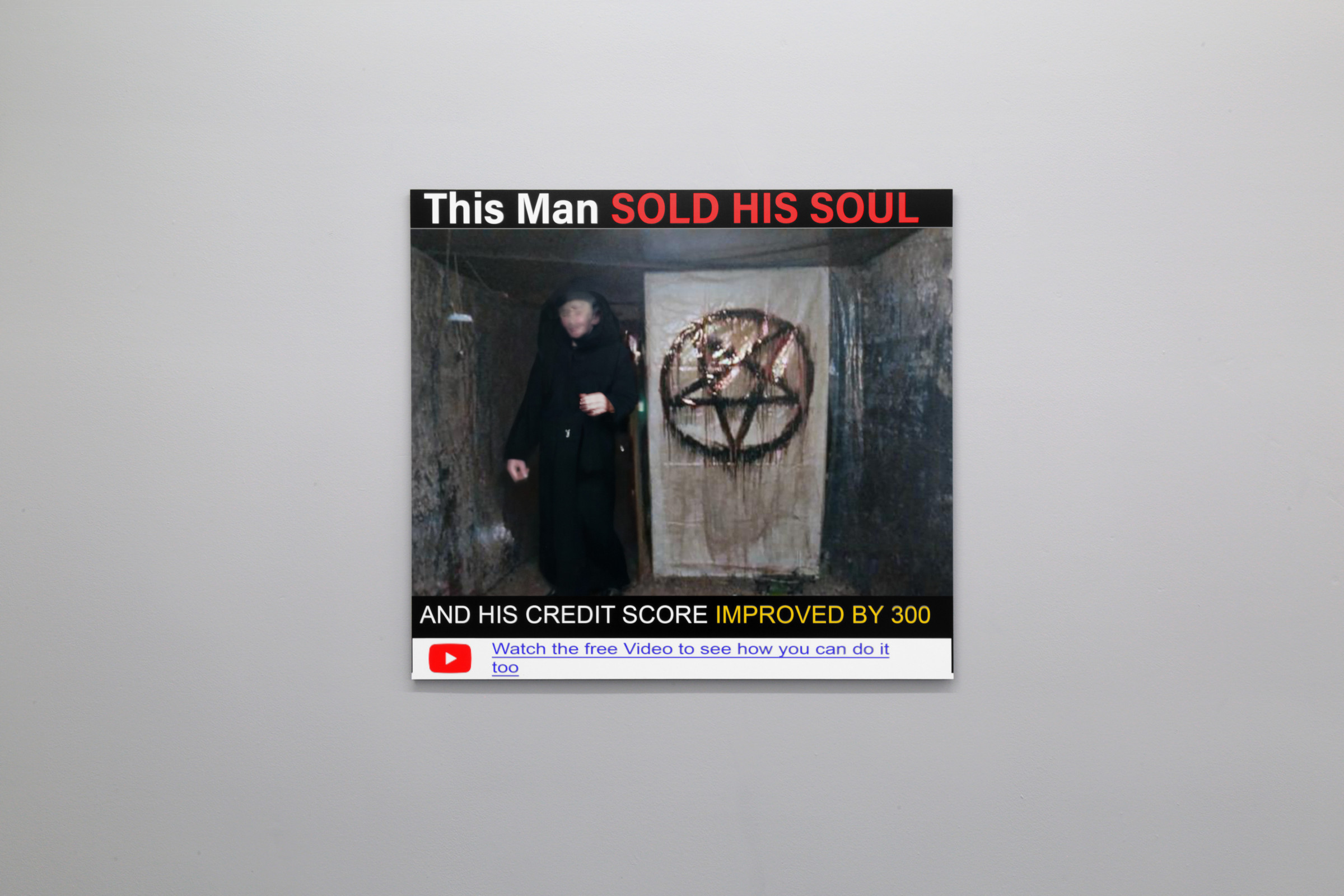
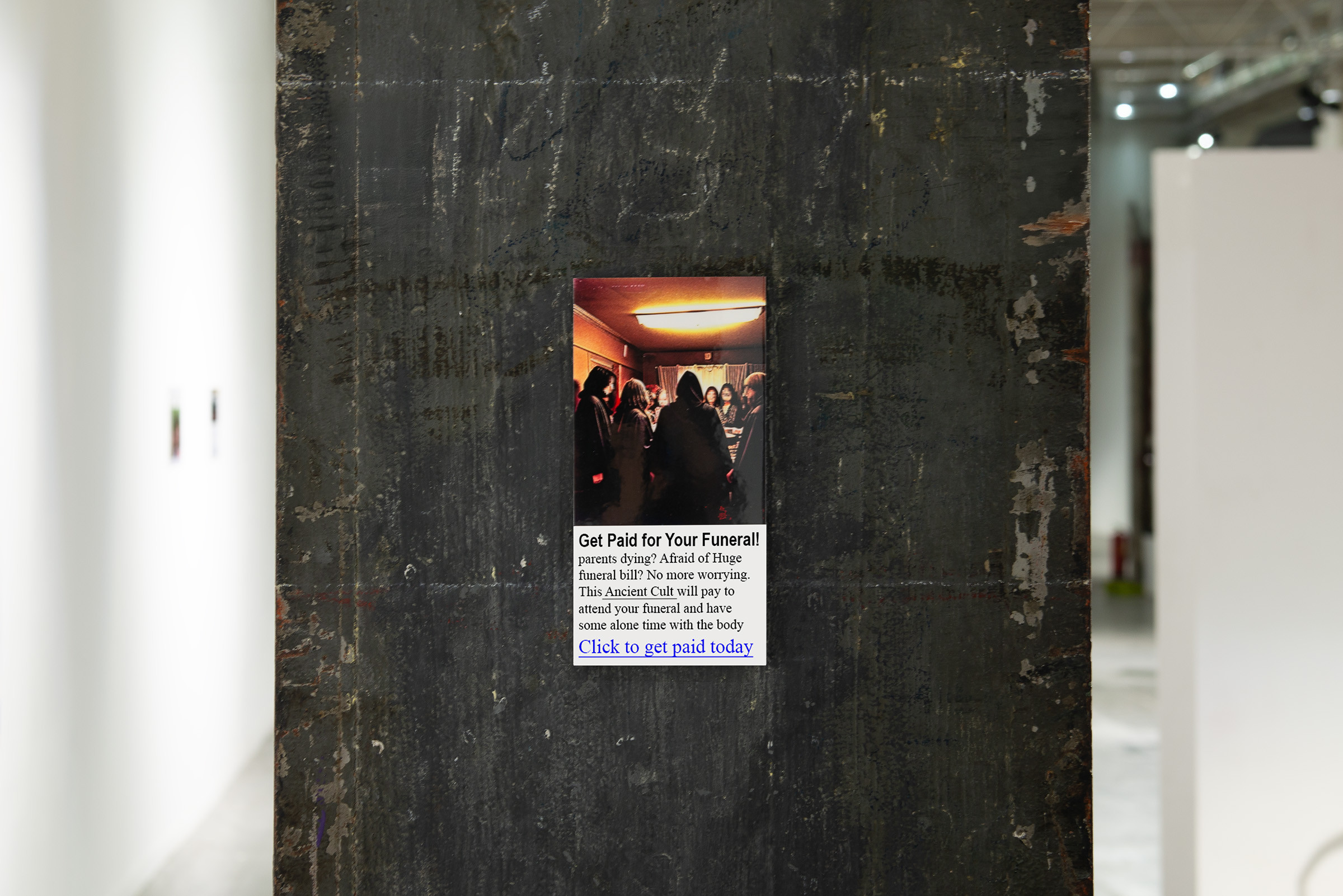
The real difference is that Gen Z were already born within a digital landscape ruled by corporations. Placing all the memories of the early years of their life on the internet, they cannot help but feel nostalgic towards a past that was already compromised. For a new generation of digital native artists, Web 2.0 is filled with innocence and nostalgia in a similar way that Web 1.0 was for post-internet artists. Learning by their practice, emerging artists are sympathizing with the feeling of loss towards their past lives online. Dutch artist Melle Nieling represents this feeling by recreating common tropes in old fashioned spam advertising. His works devirtualizes pop-up banners, emphasizing promises of evading taxes, age-reversal serums or making billions by clicking on a link. In works like Soul (2023) and Funeral (2023), some of these statements take a spiritual turn, presenting clickbait stories of people selling their soul in exchange of points on their credit score, or ancient cults paying for funeral bills. Recalling the terrain of online flash games websites and pirate websites that Gen Z spent its pre-adolescent years, Nieling stages a time when scams online looked like annoying spam banners. When the internet was still naive, digital traps to collect and sell your data had the look of stretched images, funky fonts, hot singles to meet in your surroundings and shiny sports cars to win with a single click.
Gwynethat (2024), Mielle Nieling at Loods 6 during Post Fascism, photo by Vex Noir
London-based artist Gordon Hack also investigates the bond he sees between figurative art and corporate imagery, with his paintings recreating the text overload in security signs, real estate advertising and commercial billboards. By asking an industrial sign making company to produce these ads, Hack fuses his practice with that of an industrial manufacturer, inhabiting the role of a corporate worker having to deal with traditional printing processes, materials, typographies, and colour-matching techniques. In a Warholian act of self-automation, Hack’s works look at manual industrial procedures of image-making, opposed to the way AI is used in advertisement today to create a hyperreal world that looks like ours. By choosing industrial processes like silk-screen printing and stenciling, Hack becomes a man-machine, carefully crafting compositions from existing elements: his gestures uncover advertisement processes, opposed to what happens inside the mysterious black box of an AI.
For early post-internet artists, one of the main spaces to experiment the connection between art and marketplace was the fashion landscape. In 2024, DIS launched the pop-up store DISown in New York, presenting a series of garments that mocked commodity activism – the kind of activism carried out through slogans on mugs, t-shirts, and visor hats – and the meaning of merchandising itself. Still active as an e-commerce platform, DISown produced pieces such as the Coupon Tee: a T-shirt that functions as a real coupon, with a design inspired by the slack aesthetic of promo code finder websites. The Utility Shirt 2-Pack in collaboration with Lizzie Fitch – part of an artistic duo with Ryan Trecartin – draws inspiration from vectorized corporate icons to create a pack of tees that “are ideal for team-building sessions, human resources staff, and barefoot CEO’s”. For the perfect stock photoshoot, the Classics Salad Bowl pairs ideally with a fork, a lighthearted woman in her 30s, and an empty kitchen.
Coupon Tee by DISown. Credits: www.disown.dismagazine.com
Utility Shirt 2-Pack by Lizzie Fitch for DISown (credits)
For digital natives, the relationship between fashion and corporate culture is much more linked to a melancholic look at the idealized work spaces they’ve seen on the screen but never experienced, environments that look so unobtainable in these times of precariousness and work/life imbalance. The tendency toward self-branding, skewered in its infancy by early post-internet artists, has resulted in a perpetual state of presenting oneself as an ever-evolving start-up. Never having worked in a corporate environment, Gen Z loves cosplaying formal work wear that winks at adulthood and power. Office Sirens interpret fashion through the lens of movies like Secretary (2003) and American Psycho (2000), with thick black glasses, blazers, knee-length skirts and classy updos. In the first part of 2023, this trend morphed into a new, slightly more status affirming, form: the Boom Boom Aesthetic, or the desire to look like a flashy company CEO. If post-internet artists used fashion as an undisguised critical tool, Gen Z engages with it by applying numerous layers of post-irony and detachment. Inside the entanglements of the algorithm, it’s difficult to discern a critical action from a viral trend.
Singer AMORE in Office Siren. Credits: @tqamore
singer/model Gabbriette in Office Siren. Credits: @gabbriette
LinkedIn Graphic of “Boom Boom Aesthetic”. Credits: Max Niederhofer
Office nostalgia creeps out, making us longing for a stable income and a cubicle, LinkedIn profiles become the indispensable tool of every artist and theorist to emerge. To find the roots of today’s obsession with corporate aesthetics, there’s a need to look back at the previous generation and the same angst they felt towards losing a space they considered to be salvific. More than being just a visual trend, there’s a precise reason why corporate aesthetics that captivate Gen Z so closely resemble the works of early post-internet art and artists, who keep leading the way over a decade after their emergence. It’s a cross-generational embrace of the feeling that the online world could be eroded, divided up by corporations in order to build sloptimistic, non-human space for bots to profit off themselves. Post-internet art’s observation of how the internet and the marketplace are entangled has shifted from a critique of self-branding practices to nostalgia for a time when online advertising was much less sophisticated. The real question is whether these attempts to critique reality will stand out within the rules of algorithmic culture. Like a creature with sharp teeth, the algorithm devours every cultural symptom by repetition and commodification: a critique becomes a trend, its origins get blurred until they’re harder and harder to catch. The relationship between the internet and corporations will evolve, but will always remain a part of its core structure, and one of the main interests for artists and researchers investigating online ecology. Can we ever go back to a less corporative online life, and will art uncover how?
—
Arianna Caserta (2001) is a writer and researcher focusing on online identities and the hybridizations between audiovisual and Internet culture. She is a film theory MA student.