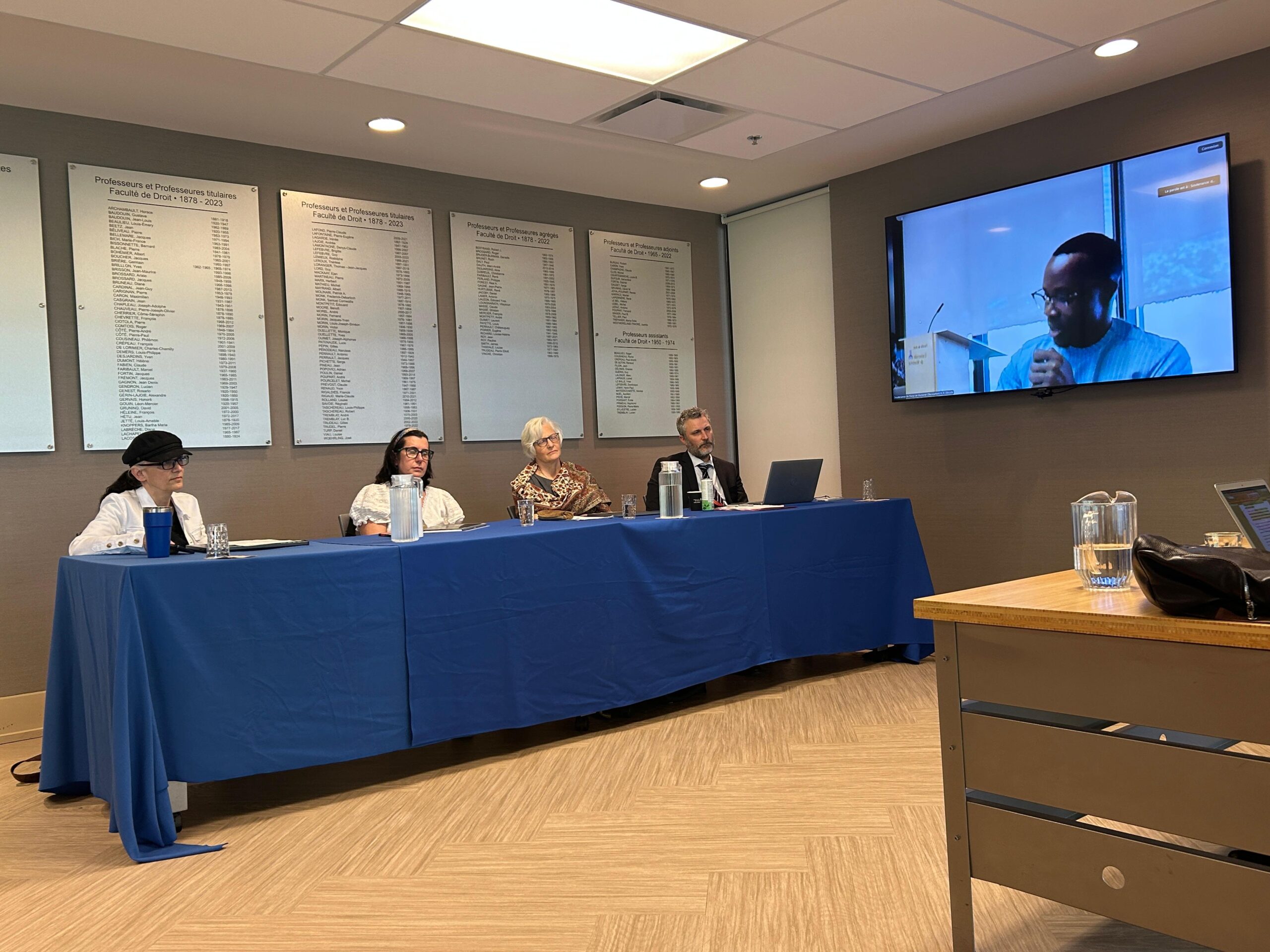
Kiran Kappeler successfully defended her dissertation
Kiran Kappeler successfully defended her dissertation

Kiran Kappeler successfully defended her dissertation
Internet Use as Everyday Religion on the Rise, Cyborgization Still in its Early Stages
Two Awards at SACM 2025 for the Media Change and Innovation Division
Daniela Jaramillo-Dent wins Best Seminar Award for outstanding teaching
Michael Reiss successfully defended his cumulative dissertation
Generative AI is Taking Over Everyday Life in Switzerland: From Experimentation to Regular Use
New publications on Transhumanist Anthropocene, Content Creators and Chilling Effects
“Artificial Intelligence” in Switzerland 2024: Rapid Diffusion and Increasing Digital Inequality
New publications on techno-religion, human augmentation technologies, internet use in Switzerland
Vortragsreihe: Wie Digitalisierung und Künstliche Intelligenz unsere Gesellschaft verändern
Univ.-Prof. Martin Pinzger has been honored with the title of ACM Senior Member. The ACM Senior Member Committee presented Univ.-Prof. Pinzger with the ACM Senior Member certificate and pin. His name will also be published on the ACM Senior Member page at https://awards.acm.org/senior-members/award-winners.
The introduction of Digital Tribulations, a series of intellectual interviews on the developments of digital sovereignty in Latin America, can be read here.
Strengthening resilience against shocks and crises is a key strategic goal for Europe. Technological sovereignty and a reliable energy supply are decisive factors in withstanding geopolitical tensions and economic pressures, thereby securing freedom, competitiveness, and sustainability for the people of Europe. By funding the competence centre ‘Autonomic Resilience in Dynamic Networked Systems’ (ARC for short), the Austrian Research Promotion Agency (FFG) is laying the foundation for a leading centre for collaborative research and the innovation of resilient systems.
Are you interested in exploring technology value chains and geopolitics through a law and political economy lens? Are you a self-starter, and do you have a critical and creative mind?
This postdoc position is part of an interdisciplinary project exploring chip-security in globalised value chains.
The post Vacancy: Postdoc in geopolitics and governance of chip security value chains appeared first on IVIR.
Über Jahrhunderte wurden die Wälder in Europa für die Holzproduktion optimiert. Das Ergebnis sind oft sehr ordentliche, gleichförmige Bestände, in denen alte, morsche Bäume oder natürliche Lichtungen fehlen.
What career opportunities are available to me after studying mathematics?
8 luglio 2026
The post 196° Mercoledì di Nexa appeared first on Nexa Center for Internet & Society.